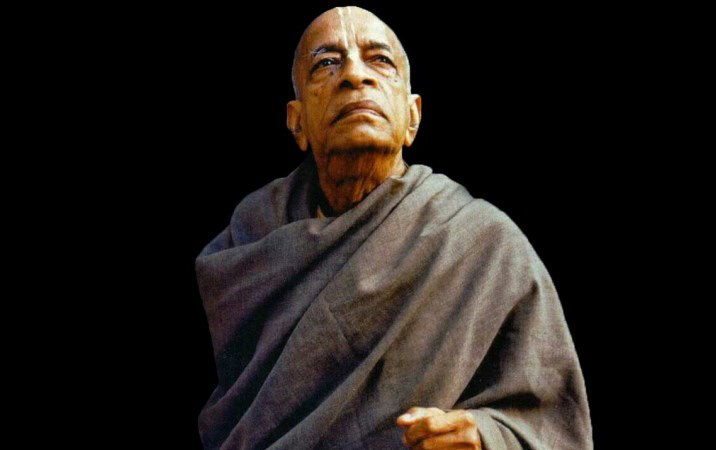
Guru Parampara – the disciplic succession Spiritual knowledge descends through the disciplic succession from Krishna. The representatives of the disciplic succession cannot change anything, add anything or subtract anything. Otherwise the disciplic succession will be broken and their preaching will have no potency. Many times, in the history this disciplic succession has been broken because the representatives of the disciplic succession did not correctly pass on the knowledge to their students.
We should understand how perfect knowledge can be received. This information is given to us by Krishna, the Supreme Personality of Godhead, in the Bhagavad-Gita, particularly in Chapter 4 Text 1 and Text 2 1) Krishna, 2) Brahma, 3) Narada; 4) Vyasa, 5) Madhva, 6) Padmanabha, 7) Nṛhari, 8) Madhava, 9) Akṣobhya, 10) Jayatirtha, 11) Jnanasindhu, 12) Dayanidhi, 13) Vidyanidhi, 14) Rajendra, 15) Jayadharma, 16)Puruṣottama, 17) Brahmaṇyatirtha, 18) Vyasatirtha, 19) Lakṣmipati, 20) Madhavendra Puri, 21) Īśvara Puri, (Nityananda, Advaita), 22) Lord Chaitanya, 23) Rūpa (Svarupa, Sanatana), 24) Raghunatha, Jiva, 25) Krishnadasa, 26) Narottama, 27) Viśvanatha, 28) (Baladeva) Jagannatha, 29) Bhaktivinode,30) Gaurakiśora, 31) Bhaktisiddhanta Sarasvati, 32) His Divine Grace A.C.Bhaktivedanta Swami Prabhupada. (Introduction to “Bhagavad-gita As It Is”) Parampara Means to Accept The Prominent Acharya Bhakta Mark – New York, USA: There are those who claim that if we continue to follow the Founder Acharya’s order and initiate new disciples on his behalf after his disappearance, there will be a break in the Parampara (disciplic succession) because a person needs physically present Diksa (Initiating) Guru in order for the Parampara to continue.
Srila Prabhupada’s direct teachings show us otherwise. Explicitly. First note the names found commonly on the official list of our disciplic succession.
“Brahma is the direct recipient of Vedic knowledge from the Personality of Godhead, and
anyone discharging his entrusted duties in disciplic succession from Brahma is sure to gain fame in this life and salvation in the next. The disciplic succession from Brahma is called the Brahma-sampradaya, and it descends as follows: Brahma, Narada, Vyasa, MadhvaMuni (Purnaprajna), Padmanbha, Nhari, Madhava, Aksobhya, Jayatirtha, Jnanasindhu, Dayanidhi, Vidyanidhi, Rajendra, Jayadharma, Purusottama,Brahmanyatirtha, Vyasatirtha, Laksmipati, Madhavendra Puri, Isvara Puri, Sri Chaitanya Mahaprabhu, Svarupa Damodara and Sri Rupa Gosvami and others, Sri Raghunatha dasa Gosvami, Krishnadasa Gosvami, Narottama dasa Thakura, Visvanatha Chakravarti, Jagannatha dasa Babaji, Bhaktivinoda Thakura, Gaurakisora dasa Babaji, Srimad Bhaktisiddhanta Sarasvati, A. C. Bhaktivedanta Swami.”
Note: Next, note the amount of rarefied, advanced, pure devotees who also faithfully perpetuated the disciplic succession.
“Sri Haridasa Pandita was a disciple of Sri Ananta Acharya, who was a disciple of Gadadhara Pandita.” Sri Chaitanya-charitamrta Adi -lila 8.54 Ananta Acharya was a reservoir of all good qualities. No one can estimate how great he was.
Pandita Haridasa was his beloved disciple.
PURPORT
Sri Ananta Acharya is one of the eternal associates of Sri Chaitanya Mahaprabhu. In Jagannatha Puri, or Purusottama-ksetra, there is a monastery known as Ganga-mata Matha that was established by Ananta Acharya. In the disciplic succession of the Ganga-mata Matha, he is known as Vinoda-manjari. One of his disciples was Haridasa Pandita Gosvami, who is also known as Sri Raghu Gopalaand as Sri Rasa-manjari. His disciple Laksmipriya was the maternal aunt of Ganga-mata, a princess who was the daughter of the King of Puliya. Ganga- Mata brought a Deity of the name Sri Rasika-raya from Krishna Misra of Jaipur and installed Him in the house of Sarvabhauma in Jagannatha Puri. The disciple in the fifth generation after Sri Ananta Acharya was Sri Vanamali; in the sixth generation, Sri Bhagavan dasa, who was a Bengali; in the seventh generation, Madhusudanadasa, who was an Oriya; in the eighth generation, Nilambara dasa; in the ninth generation, Sri Narottama dasa; in the tenth generation, Pitambara dasa; and in the eleventh generation, Sri Madhava dasa. The disciple in the twelfth generation is presently in charge of the Ganga-mata monastery. CC Adi 8.60 Bhagavata Acharya, Vishnudasa Acharya, Cakrapati Acharya and Ananta Acharya were the sixth, seventh, eighth and ninth branches of Davita Acharya.
PURPORT
In his Anubhasya Sri Bhakti siddhanta Sarasvati Gosvami Prabhupada says that Bhagavata Acharya was formerly among the followers of Advaita Acharya but was later counted among the followers of Gadadhara Pandita. The sixth verse of Sakha-niryayamrta, a book written by Yadunandana dasa, states that Bhagavata Acharya compiled a famous book of the name Prema-tarangini. According to the Gaura-ganoddesa-dipika, verse 195, Bhagavata Acharya formerly lived in Vrndavana as Sveta-manjari. Vishnudasa Acharya was present during the Khetari-mahotsava. He went there with Acyutananda, as stated in the Bhakti-ratnakara, Tenth Taranga. Ananta Acharya was one of the eight principal gopis. His former name was Sudevi. Although he was among Davita Acharya’s followers, he later became an important devotee of Gadadhara Gosvami. CC Adi 12.58 “In this connection, Srila Bhaktivinoda Thakura, in his Amrta-pravaha-bhasya, gives this short
note: “Sri Advaita Acharya is one of the important trunks of the bhakti-kalpataru, or desire tree of devotional service. Lord Sri Chaitanya Mahaprabhu, as a gardener, poured water on the root of the bhakti tree and thus nourished all its trunks and branches. Adi 12.73
Note: Reading the above quotes we find that some very influential acharyas are not mentioned in the common, official list of the disciplic succession of the Brahma Sampradaya, which we belong to. Here are full branches off some of the main trunks, and even important trunks that are not listed. Why?
“Regarding parampara system: there is nothing to wonder for big gaps. Just like we belong to the Brahma Sampradaya, so we accept it from Krishna to Brahma, Brahma to Narada, Narada to Vyasadeva, Vyasadeva to Madhva, and between Vyasadeva and Madhva there is a big gap.
But it is sometimes said that Vyasadeva is still living, and Madhva was fortunate enough to meet him directly.In a similar way, we find in the Bhagavad-gita that the Gita was taught to the sungod, some millions of years ago, but Krishna has mentioned only three names in this parampara system—namely, Vivasvan, Manu, and Iksvaku; and so these gaps do not hamper from understanding the parampara system. We have to pick up the prominent acharyas, and follow from him. There are many branches also from the parampara system, and it is not possible to record all the branches and sub-branches in the disciplic succession. We have to pick up from the authority of the acharya in whatever sampradaya we belong to.” Srila
Prabhupada letter to: Dayananda — San Francisco, CA 12 April, 1968 Note: The Prominent Acharya whose name gets mentioned in the list is one who had to make adjustments due to a break in the disciplic succcession. He had to give teachings according to time place and circumstance that would point back to the Essence of the giver of the seed of Bhakti, Lord Chaitanya. There are many trunks, branches and sub-branches of disciples of disciples, but only the name of the PROMINENT Acharya who starts a NEW main trunk is listed in our list ofdisciplic succession, and he is the important one to pick up from, Srila Prabhupada confirms this word for word in this next quote.
“Regarding your question about the disciplic succession coming down from Arjuna, it is just like I have got my disciples, so in the future these many disciples may have many branches of disciplic succession.
So, in one line of disciples we may not see another name coming from a different line. But this does not mean that person whose name does not appear was not in the disciplic succession.
Narada was the Spiritual Master of Vyasadeva, and Arjuna was Vyasadeva’s disciple, NOT AS INITIATED DISCIPLE but there was some blood relation between them. SO, THERE IS CONNECTION IN THIS WAY and it is not possible to list all such relationships in the short description given in Bhagavad-gita As It Is.
Another point is that disciplic succession does not mean one has to be directly a disciple of a particular person. The conclusions which we have tried to explain in our Bhagavad-gita As It Is the same as those conclusions of Arjuna. Arjuna accepted Krishna as the Supreme Personality of Godhead, and we also accept the same truth under the disciplic succession of Chaitanya Mahaprabhu. Srila Prabhupada Letter to: Kirtanananda — L.A. 25 January, 1969
Note: So, there are MANY ways to come under the disciplic succession, but the ONE COMMON POINT is that an authorized Acharya starts the particular trunk or branch. He is the prominent acharya whose orders must be followed if a disciple is to continue the branch. If that disciple
instructs differently than his acharya, the branch dries up.
“Advaita Acharya was a disciple of Madhavendra Puri, Isvara Puri’s spiritual master. Therefore, Isvara Puri, the spiritual master of Sri Chaitanya Mahaprabhu, was Advaita Acharya’s Godbrother. As such, Sri Chaitanya Mahaprabhu treated Advaita Acharya as His spiritual master, but Sri Advaita Acharya did not like this behaviour of Lord Chaitanya, for He wanted to be treated as His eternal servant. Advaita Prabhu’s aspiration was to be a servant of the Lord, not His spiritual master.” Adi 17.68 “In this connection, Srila Bhaktivinoda Thakura, in his Amrta-pravaha-bhasya, gives this short note: “Sri Advaita Acharya is one of the important trunks of the bhakti-kalpataru, or desire tree of devotional service. Lord Sri Chaitanya Mahaprabhu, as a gardener, poured water on the root of the bhakti tree and thus nourished all its trunks and branches. But nevertheless, under the spell of maya, the most unfortunate condition of a living entity, some of the branches, not accepting the gardener who poured water on them, considered the trunk the only cause of the great bhakti-kalpataru. In other words, the branches or descendants of Advaita Acharya who considered Advaita Acharya the original cause of the devotional creeper, and who thus neglected or disobeyed the instructions of Sri Chaitanya Mahaprabhu, deprived themselves of the effect of being watered and thus dried up and died. It is further to be understood that not only the misguided descendants of Advaita Acharya, but anyone who has no connection with Chaitanya Mahaprabhu-even if he is independently a great sannyasi, learned scholar or ascetic- is like a dead branch of a tree.” Adi 12.73
Note: Sri Advaita Acharya approached Lord Chaitanya who was the most prominent acharya despite the fact that HIS initiating spiritual master was Madhavendra puri. It is a fact that Madhavendra Puri is listed PREVIOUS to Lord Chaitanya on the Parampara list of prominent acharyas. Advaita acharya picked up from the Prominent Acharya, who was the current link who introduced something NEW to be followed by everyone, superseding the orders of the acharyas previous to him. He strictly followed the teachings of that prominent acharya.
“As already stated, Brahma is the original spiritual master for the universe, and since he was initiated by the Lord Himself, the message of Srimad-Bhagavatam is coming down by disciplic succession, and in order to receive the real message of Srimad-Bhagavatam one should approach the current link, or spiritual master, in the chain of disciplic succession.” SB 2.9.7 Note; he current link is the disciple who is following the Prominent Acharya’s orders, cent percent. As the previous letter to Kirtananda (1/25/69) showed, such a link might “only” be an instructing spiritual master! He does not need to be an initiating spiritual master. It is right there in black and white.
“The conditions for hearing the transcendental message of the Absolute Truth are set forth herein. The first condition is that the audience must be very sincere and eager to hear. And the speaker must be in the line of disciplic succession from the recognized Acharya.” S.B. 1.1.13 Note; currently”, the only acharyas I recognize are those who follow the instructions of the Founder-acharya of our trunk of the devotional tree. He told us to become instructor gurus, but he would remain the initiating Guru.
“Regarding Sydney, that the President has left, if one does not follow the regulative principles, then he will leave. That is a fact. Has somebody else been elected? This is the function of the GBC, to see that one may not be taken away by Maya. The GBC should all be the instructor
gurus. I am in the initiator guru, and you should be the instructor guru by teaching what I am teaching and doing what Aim doing. This is not a title, but you must actually come to this platform. This I want. (Letter to: Madhudvisa: — Detroit August 4, 1975) He shall be the supreme power with respect to all matters of the Society, and that status shall not be occupied by or shared with any other individual, either during his lifetime, OR AFTER HIS DEATH.” (Certificate of Incorporation: Jan 12 1976) Nov 1977 – “The system of management will continue as it is now and there is no need of any change.” (Section1. Srila Prabhupada’s Last Will and Testament) Nov 1977 – “In the event of death or failure to act for any reason of any of the said directors, a successor director or directors may be appointed by the remaining directors, provided the new director is my initiated disciple.