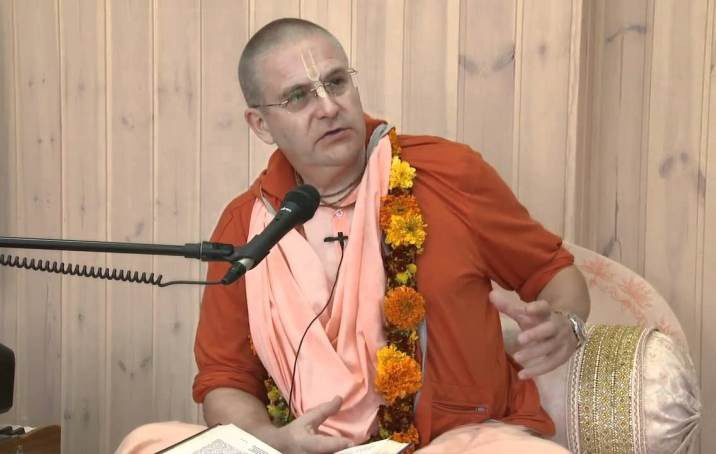
Note: The below post was received on Jan 14, 2012 as comment for the article "Recent Falldown – Prabhavisnu Svami" Dear Times Editor The trials of a man are many when he seeks to do the ultimate good. Prabhavisnu prabhu has faced many, many trials his current detractors cannot even imagine taking on the responsibility of.
Charity, translated as love, dictates compassion for someone who fails to some extent in his devotional life. Sudama Swami told me of his going to Srila Prabhupada and confessing his inability to control himself. Srila Prabhupada told him a story. A man was fighting a powerful opponent and was knocked down, he got up to fight more but was again knocked down, and again, and again he was knocked down but each time he got up and attempted to continue the fight. Srila Prabhupada said when such a man fights, and tries again and again, no one can fault that man.
That Prabhavisnu prabhu still aspires to somehow humbly serve the society of devotees in some way is evidence that he has not given up his persoanl fight against illusion.
One hopes your Times editorials on this subject, and others like it, will seek to convey a message of forgiveness for the mistakes devotees make in spiritual life. A falldown should engender feelings of sadness, not fuel contempt for the fallen, nor the institution, ISKCON, they are a part of. To make an issue of this type of failure and use it to denounce all ISKCON gurus and leaders is like denouncing all the people of a particular race as sick after finding a member of that race in ill health.
Christ said, "hate the sin, but love the sinner." So called devotees who seek to find fault and cry for vengeful ostracism of those who have fallen on difficult times in their spiritual quest for reuniting with Krishna are narrow minded and usually obviously pompous. This is why Christ was crucified: he stood up to the purist Pharisees who held the "law" above compassion for the
lawbreakers.
To understand when compassion is appropriate one must assess the mood of the fallen person.
If honest repentance is shown in that person and a renunciation of status and prestige is made the community of that person should not further condemn, but rather commend him, or at least wish him well in his reconstructed life.
I hope this will change the hearts of those who seek revenge and seem to enjoy punishing others for their mistakes. Such persons look ridiculous, unjustifiably proud and puffed-up. Their pleasure is in pointing to the faults of others to recommend themselves as purified souls and capable leaders. Their only real accomplishment is fault finding on a grand scale. Such hyper critical persons create strife and war between previously peaceful neighbors by promoting intolerance of differences. Their objective is simply to create an air of despair, to enlarge their cloud of depression and, with its shadow cut out the illumination of Krishna's all encompassing loving sun. I may be waxing a bit too analogous here, but, it is a fact that Krishna does love us all and is not without compassion for us no matter how far down we may fall. Supersoul is always there encouraging us to turn around and see Him, to take His guidance. Encouragement to do the right thing, as opposed to discouragement by means of chastisements directed at both the fallen person and at the body of managers he represents, is what is needed.
Purity is the force in ISKCON, but it is not the enforcer. Krishna is ultimately the enforcer. Our true success in ISKCON is how much we come to love Krishna and his devotees, both the fallen, the seemingly upright, the seemingly fixed, and the seemingly most fallen.
You fallen servant, Jnanagamya das