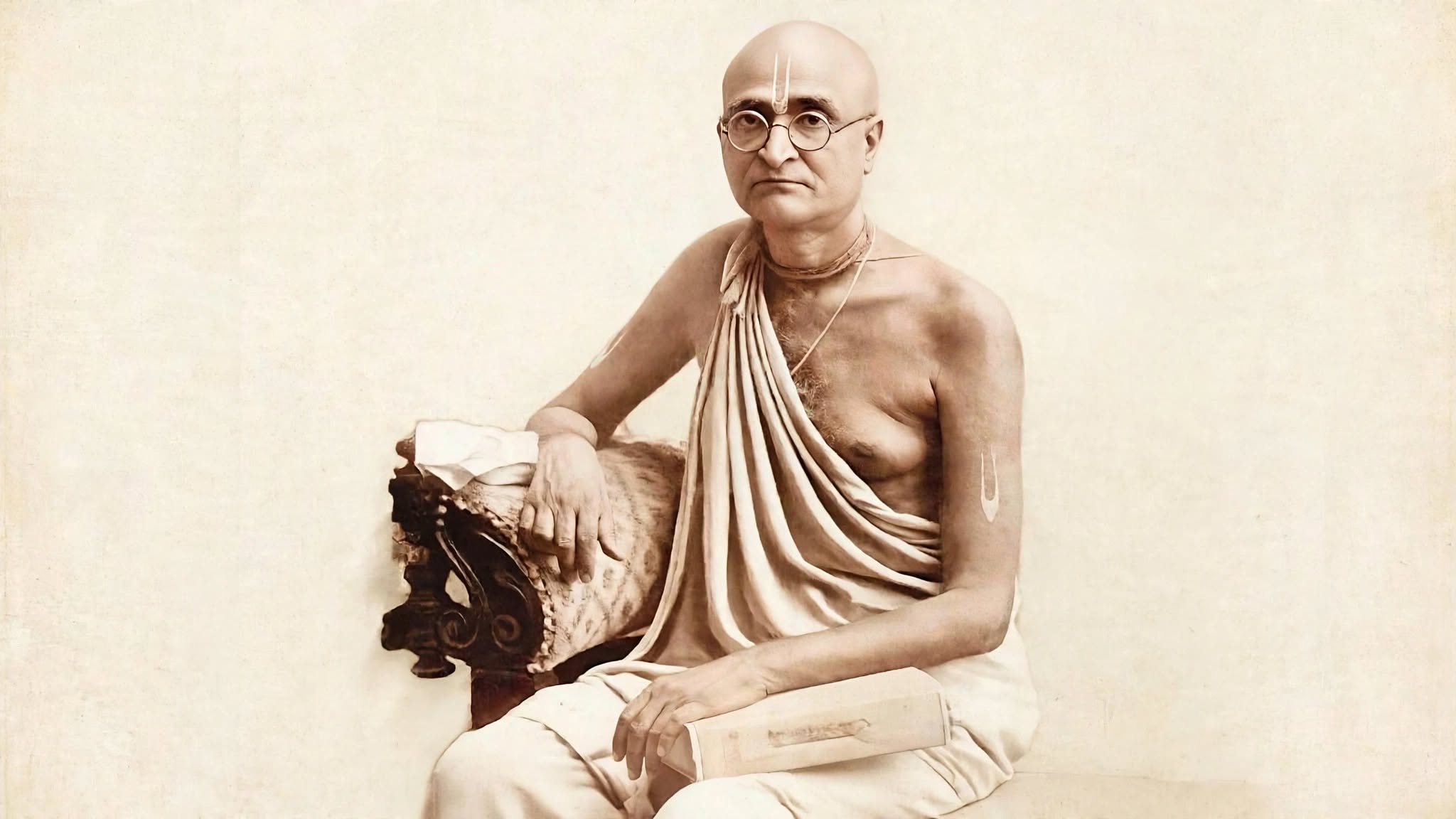
How Śrīla Bhakti Siddhānta Sarasvatī Ṭhākura Faced Criticisms During His Times - A Historical Reflection
How Srila Bhakti Siddhanta Sarasvati Thakura faced criticism for Gaudiya Math reforms and defended acharya authority — a historical reflection
An offering at the lotus feet of Śrīla Prabhupāda
Dear Śrīla Prabhupāda,
Please accept my humble obeisances at your lotus feet. All glories to Your Divine Grace. I beg to submit this short offering at your lotus feet for your pleasure.
The Foundation He Laid
Śrīla Bhakti Siddhānta Sarasvatī Ṭhākura laid the foundation for a worldwide society of Kṛṣṇa consciousness.
As a pure devotee and realized ācārya, he gave clarity to many spiritual concepts and principles through his writings — like the Guru Paramparā beginning from Lord Śrī Kṛṣṇa down to Śrī Caitanya Mahāprabhu and further down to himself.
He also introduced many essential spiritual practices when he established the Gauḍīya Maṭha. But some of these drew severe criticism and opposition from other contemporary practitioners of Gauḍīya Vaiṣṇavism.
Śrīla Bhakti Siddhānta Sarasvatī Ṭhākura had to constantly battle these strong opposing forces as he expanded the preaching of the Gauḍīya Maṭha from 1918 to 1936.
Here is a partial list of such spiritual concepts and practices introduced by Śrīla Bhakti Siddhānta Sarasvatī Ṭhākura that drew criticism:
The Eight Criticisms
1. Paramparā Not By Formal Dīkṣā
Caste Goswamis and babajis rejected Śrīla Sarasvatī Ṭhākura's tracing his line of (Guru) paramparā through various gurus not connected by formal dīkṣā.
2. Rejection of Advaita-parivāra Lineage
His opponents declared that because he did not recognize or respect the Advaita-parivāra lineage of Śrīla Gaura Kiśora dāsa Bābājī, his claim to be Bābājī Mahārāja's disciple was invalidated.
3. No Japa-mālā At Initiation
Furthermore, since Śrīla Gaura Kiśora dāsa Bābājī had never used a japa-mālā and had not given one at the time of Śrīla Sarasvatī Ṭhākura's “initiation,” that “initiation” was therefore invalid.
4. How Could He Give Pāñcarātrika Dīkṣā?
The implication was that since Śrīla Sarasvatī Ṭhākura had not actually received Pāñcarātrika dīkṣā from Śrīla Gaura Kiśora dāsa Bābājī, how could he confer it upon others?
5. On What Authority The Brāhmaṇa Thread?
Nor had his dīkṣā-guru worn a brāhmaṇa thread, so on what authority did he wear one?
6. Why Not Seminal Descent?
And since he professed to be a follower of Śrīla Bhaktivinoda Ṭhākura, who was initiated by the jāta-gosāi Bipina Bihārī, why did Śrīla Sarasvatī Ṭhākura not accept guru-paramparā by seminal descent?
7. From Whom Did He Get The Mantra?
Śrīla Bhaktivinoda Ṭhākura had imparted to him a Nṛsiṁha-mantra for deity worship, yet Śrīla Sarasvatī Ṭhākura gave Rādhā-Kṛṣṇa pāñcarātrika mantras to his disciples. From whom did he derive this mantra and on whose authority did he distribute it?
8. Sannyāsa Without A Sannyāsa-guru
Also, since he was a sannyāsī without a sannyāsa-guru, how could he give sannyāsa to others?
How Did Śrīla Bhakti Siddhānta Sarasvatī Ṭhākura Respond?
He said:
“Śrīla Bhaktivinoda Ṭhākura is Kamala Mañjarī, a personal associate of Rādhā Rāṇī. He directed me to establish daiva-varṇāśrama. I must obey his order. An ācārya is not under śāstra. He can make śāstra. Śrīla Bhaktivinoda Ṭhākura, the ācārya, has inspired me in various ways. By his mercy and that of Śrīla Gaura Kiśora dāsa Bābājī Mahārāja and previous ācāryas, we are going on, not caring for the precise technicalities of smārtas.”
Although this presentation of bhāgavata-paramparā appears to be new, it is based on essential understanding of scripture.
Anything novel given by an ācārya but founded on śāstras is called vaiśiṣṭya (a special characteristic).
Ācārya Rāmānuja and Madhva apparently introduced new ideas, yet because those were grounded in śāstras they came to be accepted.
Phalena paricīyate: “An action should be judged by its result.”
The level of bhajana and the preaching activities of the Gauḍīya Maṭha speak for themselves. Owl-like persons cannot see this, but the honest will acknowledge it.
It is to be particularly noted that Śrīla Bhakti Siddhānta Sarasvatī Ṭhākura defended his introduction of the novel practices by stating:
An ācārya is not under śāstra. He can make śāstra. Anything novel given by an ācārya but founded on śāstra is called Vaiśiṣṭya (a special characteristic). Ācāryas Rāmānuja and Madhva apparently introduced new ideas, yet because those were grounded in śāstra they came to be accepted.
What Śrīla Bhaktivinoda Ṭhākura Wrote
Śrīla Bhaktivinoda Ṭhākura also wrote on this subject in his commentary on his own Tattva-sūtra:
“Devotees of the Supreme Lord are not controlled by scriptures, because their activities are harmonious with divine wisdom. Therefore, when realized devotees ordain any new arrangement, it should be accepted as a religious code even if not found in the scriptural directions of previous sages.”
What Śrīla Prabhupāda Wrote
Śrīla Prabhupāda wrote about some of these criticisms of Śrīla Bhakti Siddhānta Sarasvatī Ṭhākura and how his Guru Mahārāja responded to them in a letter to Achyutananda Swami:
“The sacred thread inaugurated by my Guru Mahārāja according to pāñcarātrika system and Hari-bhakti-vilāsa by Śrīla Sanātana Goswāmī must continue. It does not matter whether the priestly class accepts it or not. When my Guru Mahārāja Bhaktisiddhānta Sarasvatī Goswāmī Prabhupāda introduced this system, it was protested even by His inner circle of Godbrothers or friends. Of course, He had actually no Godbrothers, but there were many disciples of Bhaktivinoda Ṭhākura who were considered as Godbrothers who protested against this action of my Guru Mahārāja, but He didn't care for it.”
— Śrīla Prabhupāda letter to Achyutananda Swami, 14th November, 1970
Why This History Is Relevant Today
It is very unfortunate and saddening that the GBC of ISKCON and other leaders of ISKCON are opposing the system of initiation by the officiating ācāryas or representative of the ācāryas that was ordered by Śrīla Prabhupāda for ISKCON as a heresy.
One of the reasons they give is that there is no precedent in the Vedic history and tradition of such a practice of initiation by a representative of an ācārya or initiation by a ritvik after the disappearance of the Ācārya.
Śrīla Prabhupāda is an empowered ācārya to establish the worldwide Hare Kṛṣṇa movement as per the prophecies of Śrī Caitanya Mahāprabhu. And hence these instructions of Śrīla Bhakti Siddhānta Sarasvatī Ṭhākura and Śrīla Bhaktivinoda Ṭhākura are especially relevant here:
An ācārya is not under śāstra. He can make śāstra. Anything novel given by an ācārya but founded on śāstra is called Vaiśiṣṭya (a special characteristic). Ācāryas Rāmānuja and Madhva apparently introduced new ideas, yet because those were grounded in śāstra they came to be accepted. Devotees of the Supreme Lord are not controlled by scriptures, because their activities are harmonious with divine wisdom. Therefore, when realized devotees ordain any new arrangement, it should be accepted as a religious code even if not found in the scriptural directions of previous sages.
— Śrīla Bhaktivinoda Ṭhākura in his commentary on his own Tattva-sūtra
Closing Prayer
My prayers to Śrīla Prabhupāda to be always rightly situated in the service of his divine mission and acting always for his pleasure.